Follow the repeated shape
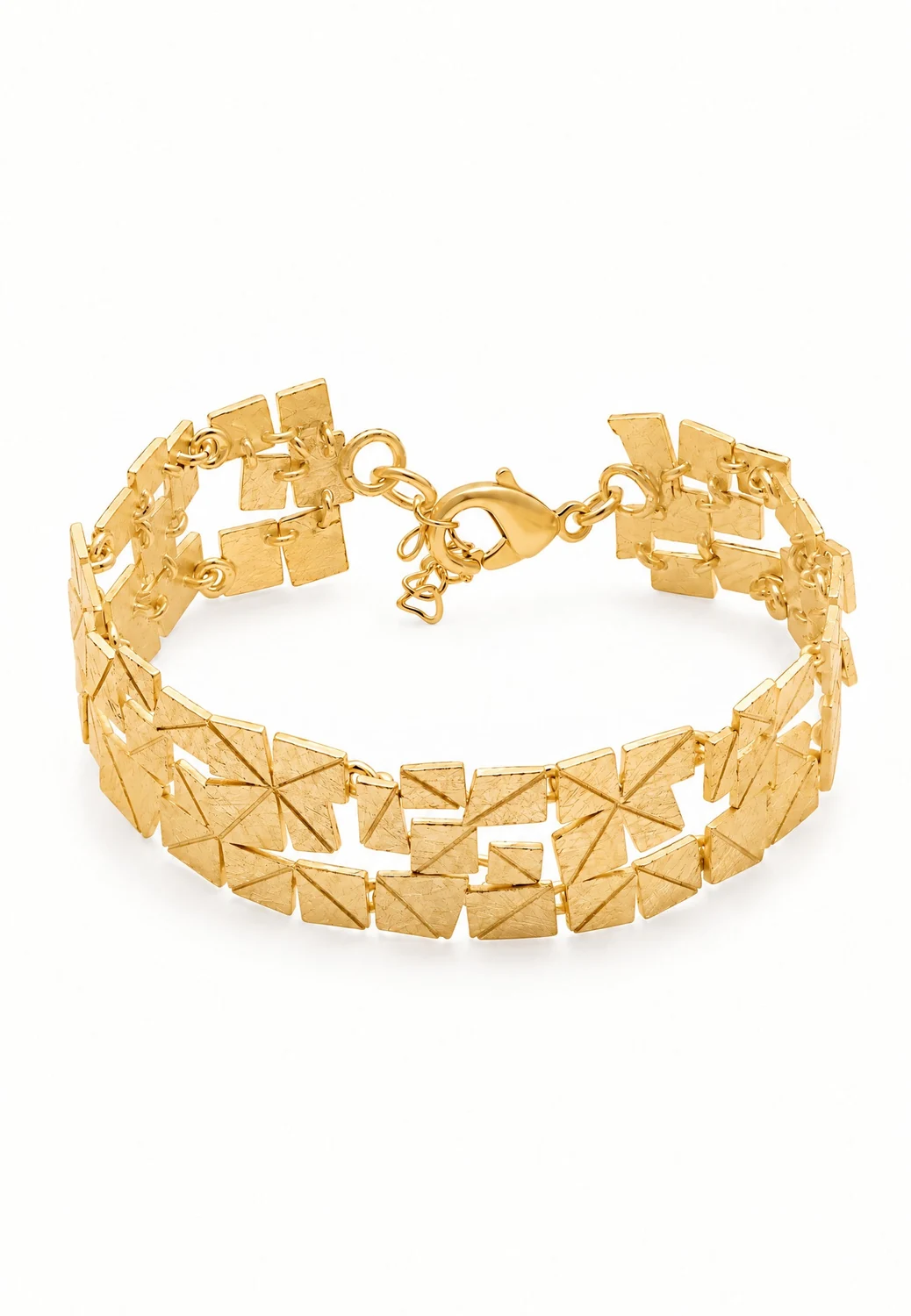
A linked bracelet has a visual tempo: metal, opening, metal, opening. Start by following that sequence around the piece rather than looking only at its widest point. Oval, rounded and angular outlines can give very different impressions without needing an added charm. Our editorial suggestion is to identify the feature you enjoy most, whether it is the open space between links or the continuity of the surface, and let that guide the rest of the outfit.
Read the Partis bracelet details
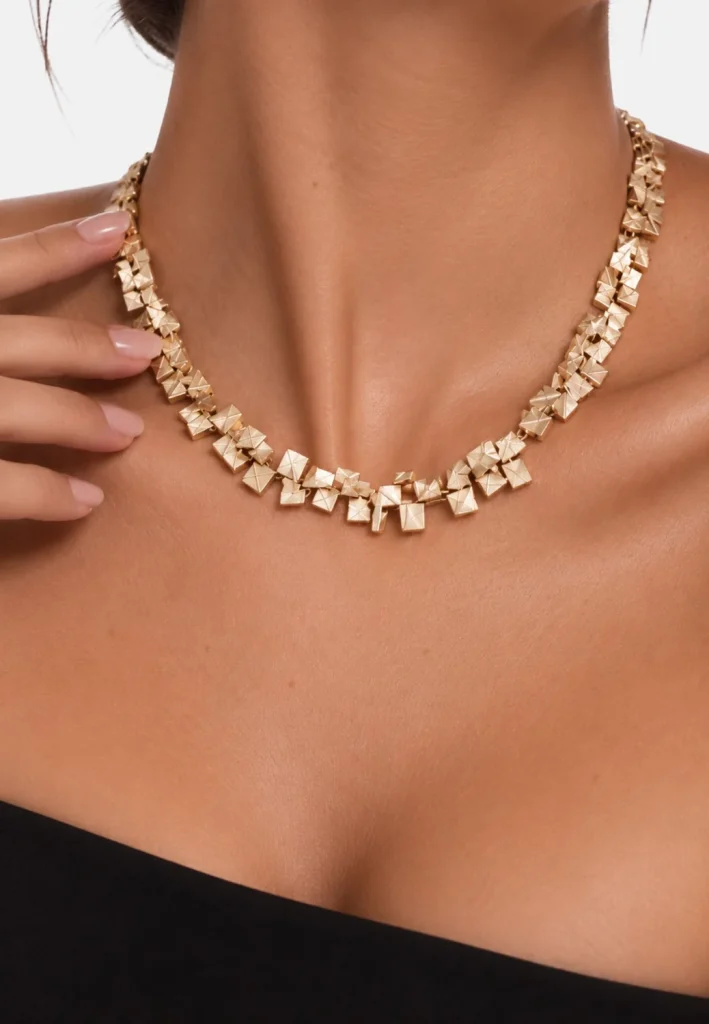
Heideman's Armband Partis offers a geometric pattern in brushed gold colour. The listing specifies 316L stainless steel with 18K gold plating, a lobster clasp and a length of 18 cm plus a 3 cm extension; its stated width is 22 mm. Keep those bracelet measurements distinct from the related necklace's specifications. Our suggestion is to compare the broad articulated surface with a bracelet you know, remembering that listed length alone does not predict the same movement on every wrist.
Let the sleeve join the composition
Try the bracelet with a sleeve pushed back, then with the cuff resting in its ordinary position. A generous knit may reveal only one or two links, while a short sleeve exposes the whole circle. Neither view is inherently better. Decide whether you want an intermittent detail or a clear band of metal. Before adding a second bracelet, see whether a small change to the cuff gives the first one the visibility you were seeking.
Balance a watch or another bracelet
If you wear a watch, compare its case and strap with the scale of the links. Our styling suggestion is to give the two objects a little visual independence: use opposite wrists, or test a restrained combination on the same wrist. Notice physical contact as well as appearance. Repeated rubbing can matter to surfaces, so a pleasing photograph is not enough reason to keep pieces pressed together. One linked bracelet can also provide the entire wrist detail.
Check the closure in daily gestures
Fasten the bracelet as the maker intends and check that the closure is fully engaged. Then bend the wrist, rest the hand on a desk and pull a sleeve on gently. These ordinary gestures reveal interactions that an overhead product image cannot show. Do not force a clasp or change a link to improvise a fit. If the listed size does not suit the way you want the piece to sit, compare another size or ask the maker for model-specific guidance.
Preserve the sequence in storage
Lay the bracelet in its own space when you put it away, with the links relaxed and the fastening visible. Our practical suggestion is to check for a twisted link or an incompletely closed clasp before the next wear. Use the brand's current cleaning advice for the exact finish, and keep abrasive tools away unless explicitly recommended. A regular pattern is easiest to appreciate when the bracelet is handled as an articulated object, not pulled into a tight knot with other jewellery.
Sources & further reading
- Heideman official source — The rhythm of a linked bracelet (1)
- Heideman official source — The rhythm of a linked bracelet (2)
Product specifications and availability may change. Check the official page and care guidance for the exact item. Styling suggestions are editorial ideas; material, water-resistance, allergy and durability claims must be verified for the individual product.