Set a lead line
Begin a layered necklace arrangement with one chain you want to notice first. It might be the closest line to the neck, the broadest link or a longer curve over a plain shirt. Put that piece on before adding another. Our editorial approach is to use a clear lead line as a reference, so a second necklace has a purpose beyond filling space. Looking at the full upper body, rather than only a tightly cropped neckline, helps you judge the result.
Read the Partis construction
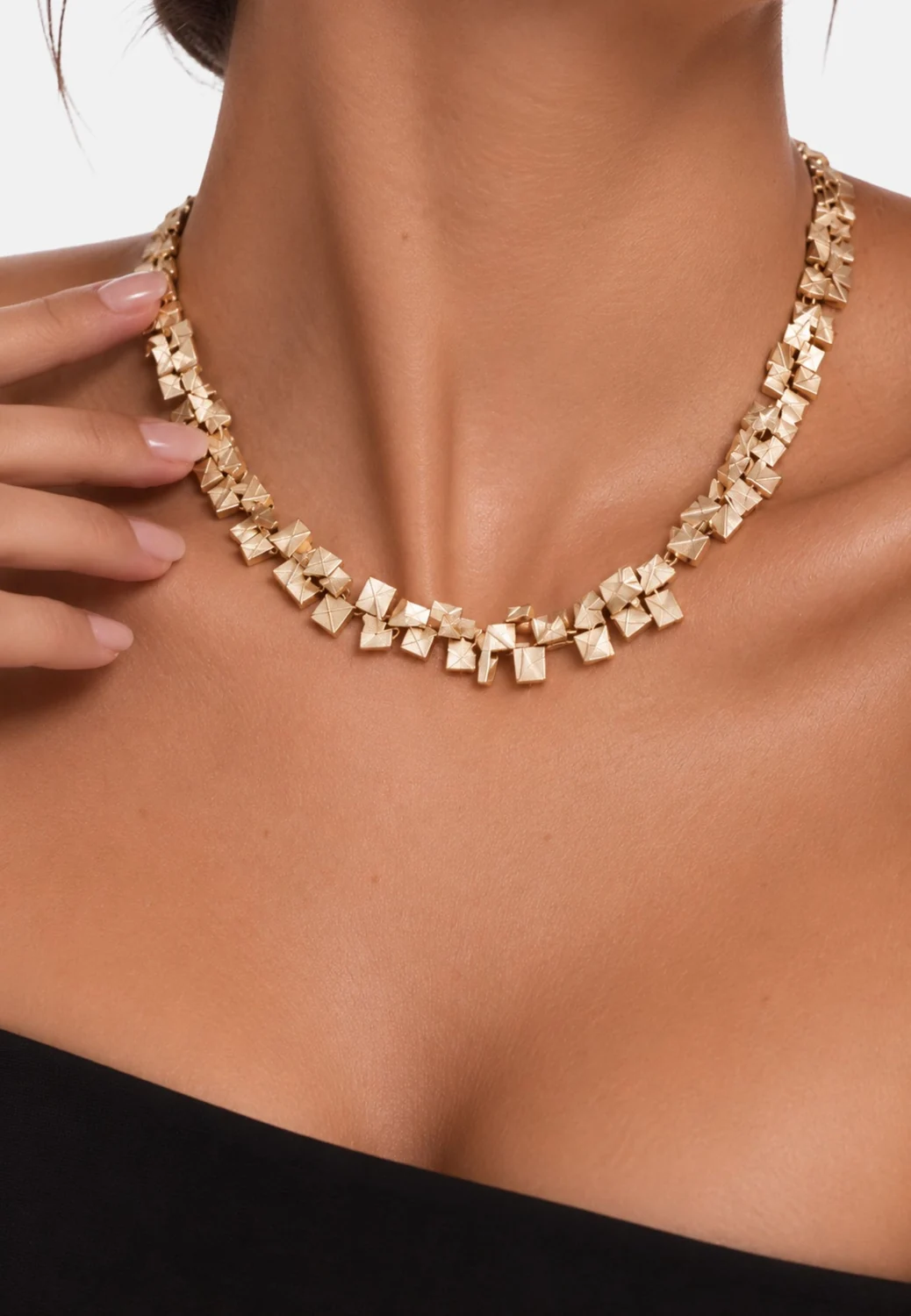
Heideman's Kette Partis uses large, geometric oval plates with a finely brushed surface. The official listing identifies 316L stainless steel with 18K gold plating, a lobster clasp and a length of 35 cm plus a 5 cm extension. Those details make it a useful reference for a pronounced upper line in an arrangement. This is our styling interpretation, not a pairing prescribed by the maker. Read a second chain separately rather than transferring Partis's construction to another piece.
Make the gaps intentional
Try two lines first and look at the space between them. A small gap can bring the pieces into a close conversation, while a larger gap lets each curve read independently. There is no fixed interval that suits every neck or garment. Use the actual fastenings and any listed adjustment positions to test the arrangement. If two necklaces repeatedly settle in the same place, change their order or remove one instead of relying on the photograph you had imagined.
Read the neckline as part of the design
A necklace can sit on skin, over fabric or partly behind a collar, and each setting changes its visibility. Check the composition with the shirt, knit or jacket you plan to wear. A patterned fabric may compete with fine links, while a seam can interrupt a pendant or lower chain. Our suggestion is to simplify one variable at a time: open the collar, move the longer line or change the fabric background before deciding that another piece is needed.
Leave room for ordinary movement
Turn your head, sit down and reach forward while checking the arrangement. Necklaces can change position as the body and clothes move; a still image does not show that interaction. Keep clasps accessible and avoid forcing links through another chain to hold a desired shape. If you prefer a stable, simple result, one carefully chosen chain is a complete option. Layering is a styling choice, not a requirement for an outfit to feel finished.
Separate the lines after wearing
Unfasten each necklace individually and lay it down before removing the next. Store the chains apart, with their ends easy to identify, so preparing the next arrangement does not begin with untangling. Check the maker's care guidance for each base material and finish, especially when combining different pieces. Our practical addition is to take a quick reference photograph of a combination you like; it preserves the spacing without asking you to store the chains intertwined.
Sources & further reading
- Heideman official source — Layered chains with a clear line of sight (1)
- Heideman official source — Layered chains with a clear line of sight (2)
Product specifications and availability may change. Check the official page and care guidance for the exact item. Styling suggestions are editorial ideas; material, water-resistance, allergy and durability claims must be verified for the individual product.